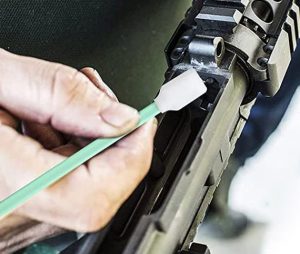
How to Choose the Right APS-C Sensor Cleaning Swab
Keeping a camera sensor clean is an important part of maintaining consistent image quality. Dust and other contaminants can enter the camera whenever an interchangeable lens is removed, and sensor spots can become particularly visible when photographing bright, uniform subjects or using smaller apertures.
When simple dust removal is not enough, a purpose-designed sensor cleaning swab can provide a more controlled way to clean the sensor’s protective surface. However, not all swabs are the same. Size, head material, construction, packaging, and cleaning format all deserve consideration.
For APS-C cameras, selecting a swab with an appropriate width is especially important.
Why Does the Size of a Sensor Cleaning Swab Matter?
One of the first specifications to check when purchasing a sensor cleaning swab is its head width.
APS-C sensors are smaller than full-frame sensors, so a swab designed specifically for APS-C applications can provide more appropriate coverage. Industry guidance on sensor cleaning also recommends selecting a swab that matches the sensor size rather than using an incorrectly sized cleaning tool.
A properly sized swab can help users perform a more consistent cleaning pass while minimizing unnecessary repeated contact with the sensor surface.
Why 16mm?
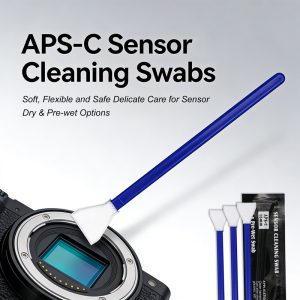
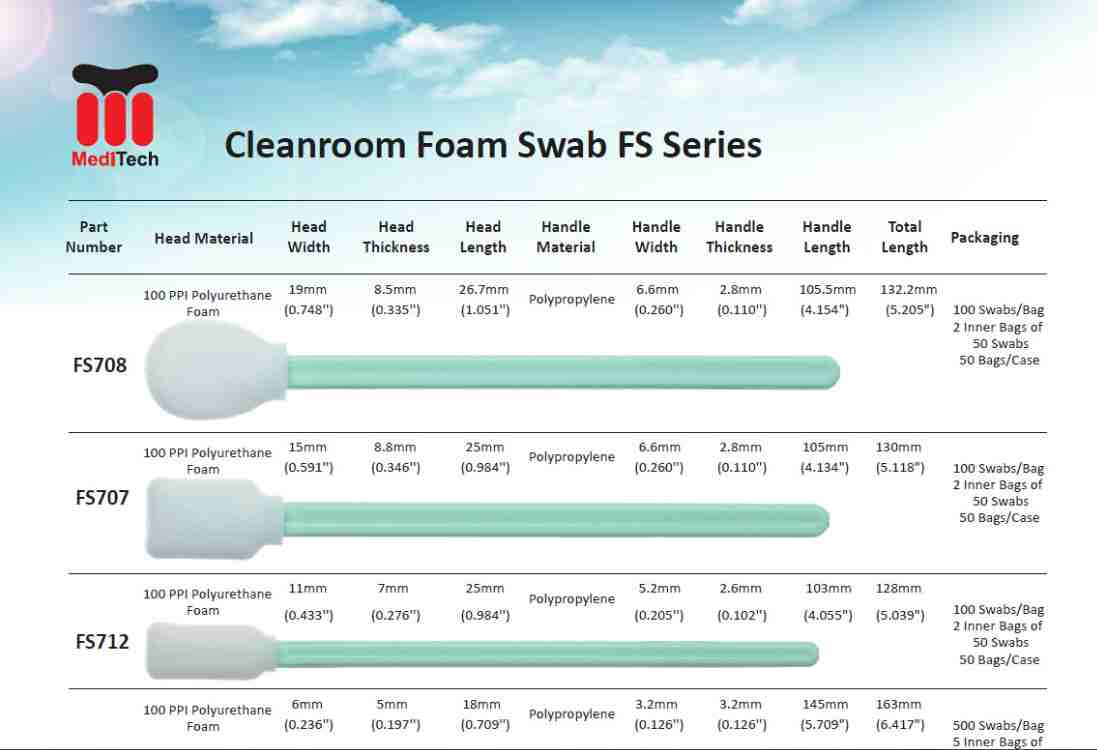
MediTech’s 16mm APS-C Sensor Cleaning Swab is designed specifically for APS-C-format camera sensors. It has a 16mm-wide cleaning head and a total length of 124mm.
This size makes it suitable for many APS-C DSLR and mirrorless camera applications.
What Material Should a Sensor Cleaning Swab Use?
The cleaning head is another important consideration.
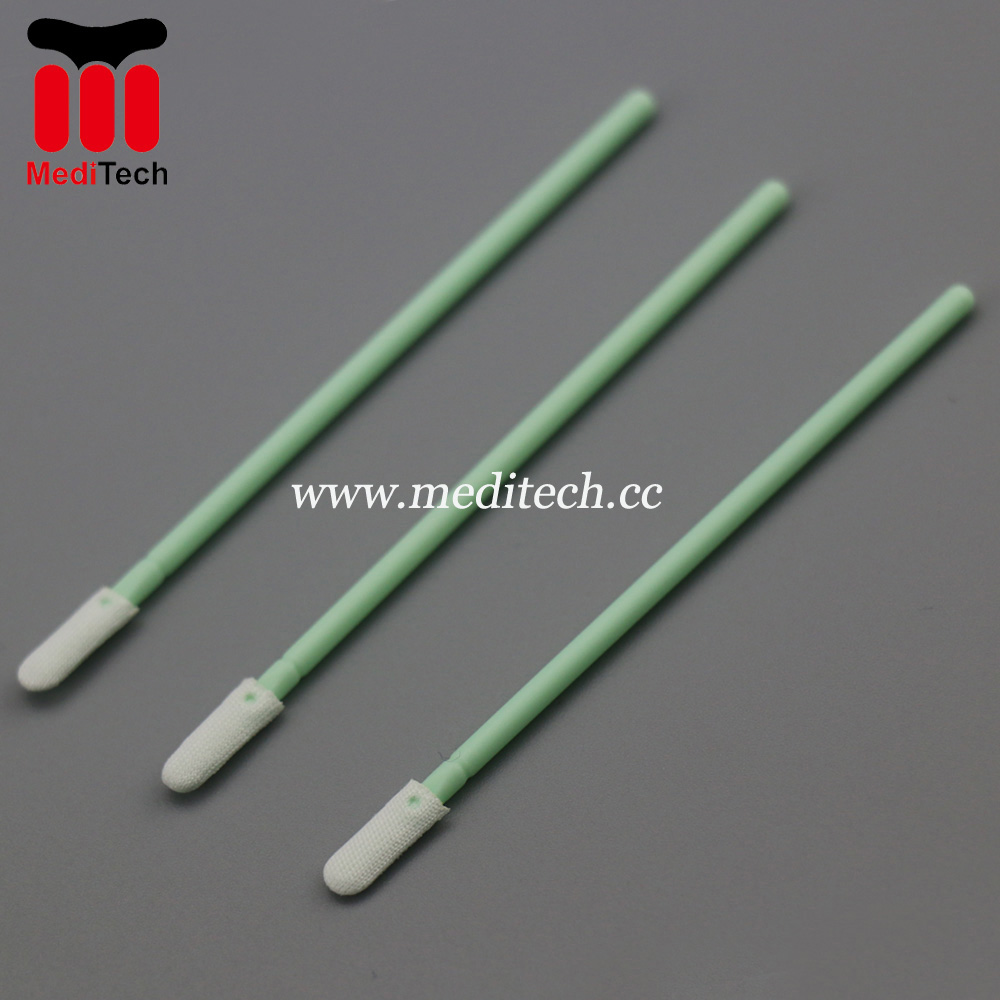
MediTech uses microfiber polyester for the head of its APS-C sensor cleaning swab. Microfiber polyester provides a soft cleaning surface designed for precision applications where controlling particles and residue is important.
According to the product specifications, the swab is intended for cleaning camera sensors, lenses, photosensitive components, and other delicate surfaces.
For sensitive optical components, it is important to avoid treating a sensor like an ordinary household surface. General-purpose cotton swabs, tissues, or unsuitable cleaning materials can introduce fibers or contaminants and may not be appropriate for sensor maintenance. Professional camera-cleaning guidance recommends purpose-designed sensor cleaning products.
Microfiber Polyester vs. Ordinary Cleaning Materials
A dedicated sensor cleaning swab offers several advantages over improvised cleaning tools:
- Purpose-designed head: Developed for precision cleaning applications.
- Microfiber polyester construction: Provides a controlled contact surface.
- Low-lint design: Helps minimize additional fiber contamination.
- Consistent dimensions: Provides predictable cleaning coverage.
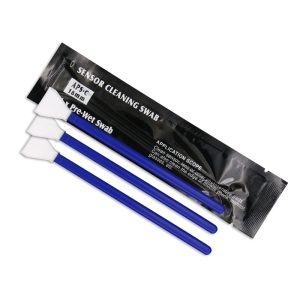
- Individual packaging: Helps protect the swab before use.
MediTech’s swabs are individually packaged and manufactured, washed, and packaged in a Class 100 cleanroom according to the product information.
These characteristics are particularly relevant when cleanliness and repeatability matter.
Why Is Thermal Bonding Important?
The way the cleaning head is attached to the handle can also affect the suitability of a sensor swab.
MediTech’s microfiber polyester head is thermally bonded to a polypropylene handle. This construction does not require glue or adhesive at the head-to-handle connection.
For precision cleaning, avoiding unnecessary adhesive materials can help reduce concerns about adhesive-related residue or contamination.
This is particularly useful when the same type of cleaning technology is being considered for optical components, industrial sensors, and other sensitive surfaces.
Dry or Pre-Wet Sensor Cleaning Swab?
Sensor cleaning applications do not all have identical requirements. This is why MediTech provides both dry and pre-wet versions of its APS-C sensor cleaning swab.
Dry Sensor Cleaning Swabs
A dry swab can be appropriate when the application calls for a dry cleaning method or when the cleaning system uses a separately supplied cleaning solution.
Pre-Wet Sensor Cleaning Swabs
Pre-wet swabs are supplied with cleaning fluid already applied. This can provide greater convenience and consistency for applications where a compatible optical cleaning solution is required.
When wet cleaning is appropriate, the cleaning solution should always be one specifically intended for the application and used according to the cleaning-product and camera manufacturer’s instructions. General lens-cleaning fluids should not automatically be assumed suitable for sensor cleaning.
What Are Sensor Cleaning Swabs Used For?
Although APS-C camera sensors are the primary target application, a precision microfiber swab can be useful in other environments.
MediTech specifies applications including:
1. DSLR and Mirrorless Cameras
The 16mm head is designed for APS-C camera sensor cleaning, making it suitable for many interchangeable-lens camera systems.
2. Optical Lenses
The swab can be used for appropriate optical cleaning applications involving dust, fingerprints, and other surface contaminants.
3. Industrial Sensors
Sensitive sensors used in industrial equipment may require localized cleaning where a conventional wipe is too large.
4. Precision Instruments
Small components and difficult-to-reach areas in precision equipment can benefit from a narrow, controlled cleaning tool.
5. Other Photosensitive Components
MediTech also identifies photosensitive parts and delicate electronic surfaces as potential applications for the product.
How to Select a Sensor Cleaning Swab
When comparing different sensor cleaning swabs, consider these five factors:
1. Sensor Format
Determine whether the application involves APS-C, full-frame, Micro Four Thirds, or another sensor format. The swab should be appropriately sized for the target surface.
2. Head Material
Look for a material designed for precision cleaning. Microfiber polyester is one option for applications requiring a soft, controlled cleaning surface.
3. Head Attachment
Consider whether the cleaning head is thermally bonded or attached using adhesive. For highly sensitive applications, an adhesive-free head construction can be advantageous.
4. Packaging
Individually packaged swabs help protect unused cleaning tools from environmental contamination and make them convenient for maintenance kits.
5. Dry or Pre-Wet Configuration
Choose a dry or pre-wet version based on the cleaning process and the manufacturer’s recommended procedure.
Why Choose MediTech for Sensor Cleaning Swabs?
For distributors and manufacturers, product performance is only part of the purchasing decision. Supply capability, customization, packaging, and manufacturing controls can also be important.
MediTech has focused on cleanroom consumables since 2014 and manufactures cleanroom swabs, microfiber swabs, polyester swabs, printer cleaning supplies, and other precision cleaning products.
For the APS-C sensor cleaning swab, MediTech provides:
- 16mm APS-C-specific design
- Microfiber polyester cleaning head
- Thermal-bonded construction
- Dry and pre-wet options
- Individual packaging
- Cleanroom manufacturing
- OEM/ODM customization
- Private-label support
- Free samples for evaluation
These capabilities make the product suitable for camera accessory brands, optical equipment suppliers, cleaning-kit manufacturers, distributors, and other companies looking for customized sensor-cleaning solutions.
Best Practices for Sensor Cleaning
A good sensor cleaning swab cannot replace proper cleaning technique. Camera manufacturers generally recommend beginning with non-contact dust removal where appropriate and working in a clean environment. Sony, for example, recommends using a plain blower for loose dust and specifically cautions against using compressed air on the image sensor.
If contact cleaning is necessary, follow the instructions supplied with the camera and cleaning system. Use the correct swab size, minimize pressure, and avoid repeatedly dragging a contaminated swab across the sensor.
A sensor swab should also be treated as a single-use cleaning tool. Reusing a swab can transfer previously collected particles back onto the surface.
 Meditech